ServicesTile Roofing
Tile Roofing in Litchfield Park
Tile itself rarely wears out. The layer under it does. We repair, re-lay and install concrete and clay tile roofs, and we show you which part of your roof needs work before you decide anything.
What a tile roof really is
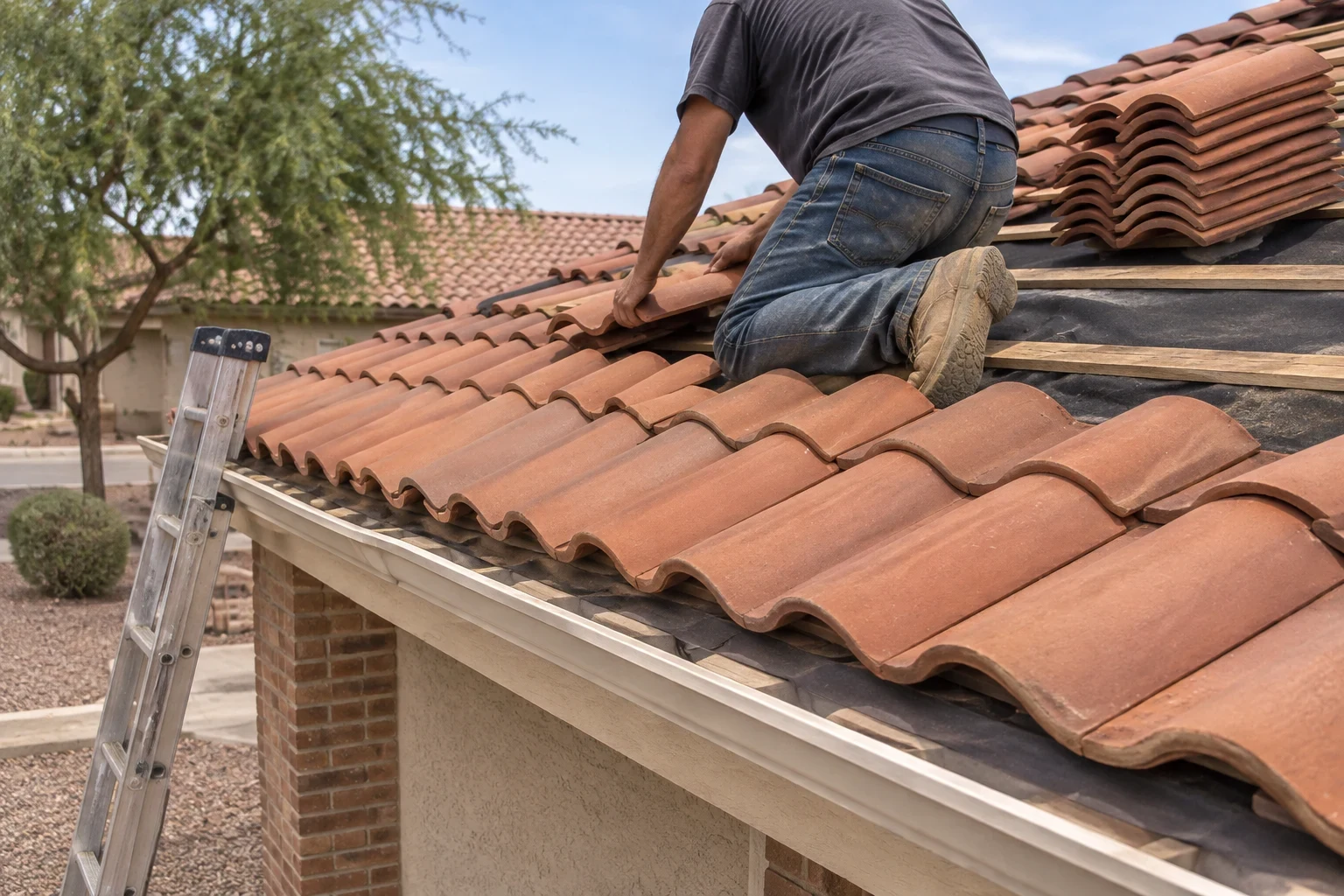
A tile roof is two roofs stacked together. The tiles on top shed most of the water and block the sun. Under them sits the underlayment, a felt or synthetic layer fastened to the wood deck. That layer is what actually keeps water out of your home.
Concrete and clay tile can last for decades. Underlayment does not. Years of Arizona sun bake older felt until it turns brittle and cracks. When that happens, the tiles can look fine from the street while water slips through below them.
So the right answer is not always a new roof. Sometimes it is a few cracked tiles. Sometimes it is new underlayment with your old tiles put back on. We tell you which one, and why. We are an Arizona KB-2 licensed contractor, and tile is everyday work for us.
What our tile roofing work covers
- Cracked and slipped tiles
- We pull broken tiles and reset the ones that have slid out of line. Replacements are chosen to fit the shape and shade of what is already on your roof. If your tile has been discontinued, you learn that before we start, along with the choices you have.
- Lift and relay
- Your tiles come up and get set aside in neat piles while we put down fresh underlayment and new battens. After that, your original tiles go right back where they were. The roof looks the same from the street, with a new waterproof layer underneath.
- Flashing and valleys
- Most tile leaks start where the roof changes direction or meets a wall, vent or chimney. We replace worn metal flashing and clear out valleys so water runs off instead of backing up.
- Ridge and hip caps
- Caps set in mortar can crack loose over time. We reset and re-secure them so wind-driven rain can't get in along the peak.
- Eave closures and bird stops
- Open gaps along the bottom row let birds and pests nest under the tile. We close them with trim made for your tile profile.
- New tile roofs
- When the deck or the tile is past saving, we build a new tile system from the deck up. Our Roof Replacement and New Roof Installation pages cover that work in more detail.
Signs your tile roof needs attention
Stains on the ceiling
Water on a tile roof often runs along the underlayment before it finds a way in. So the stain may be a few feet from the real problem. Either way, it means something up top has failed.
Cracked or missing pieces
From the yard, look for a dark gap in a row or a tile sitting crooked. One cracked tile is not a crisis, but it leaves the layer below open to sun and rain.
Original underlayment at 20 years or more
If the roof is that old and the felt has never been replaced, it is likely near the end even with no leak yet. Better to know before the summer rains than after.
Wavy or sagging rows
Rows of tile should run straight. A dip can point to rotted battens or soft decking underneath.
Drips only in hard rain
A leak that shows up only in a heavy downpour usually means water is overrunning a valley or a weak flashing joint.
What moves the price of tile work
Every tile roof prices out a little differently. A handful of things drive most of the number. Your written estimate lists them so you can see where the money goes.
Repair, relay or replace
Swapping a few tiles is a small job. Lifting and relaying the whole roof is bigger. A full tear-off with new tile is the largest of the three.
Roof size and pitch
More square feet means more underlayment and labor. Steep or cut-up roofs with many valleys take longer to work safely.
Underlayment choice
Synthetic and heavier-weight underlayments cost more than basic felt but hold up better under heat. We explain the difference so you can pick.
Tile availability
Common concrete profiles are easy to match. Older or discontinued tile may mean hunting down salvaged pieces, which adds cost.
What's under the tile
Rotted battens or soft decking only show up once tiles come off. If we find any, we photograph it and talk with you before doing extra work.
How a tile job goes
- 1
You tell us what you're seeing
On the phone we ask how old the roof is, where any leaks show up and what you have noticed. Then we set a time to come out.
- 2
We look and explain
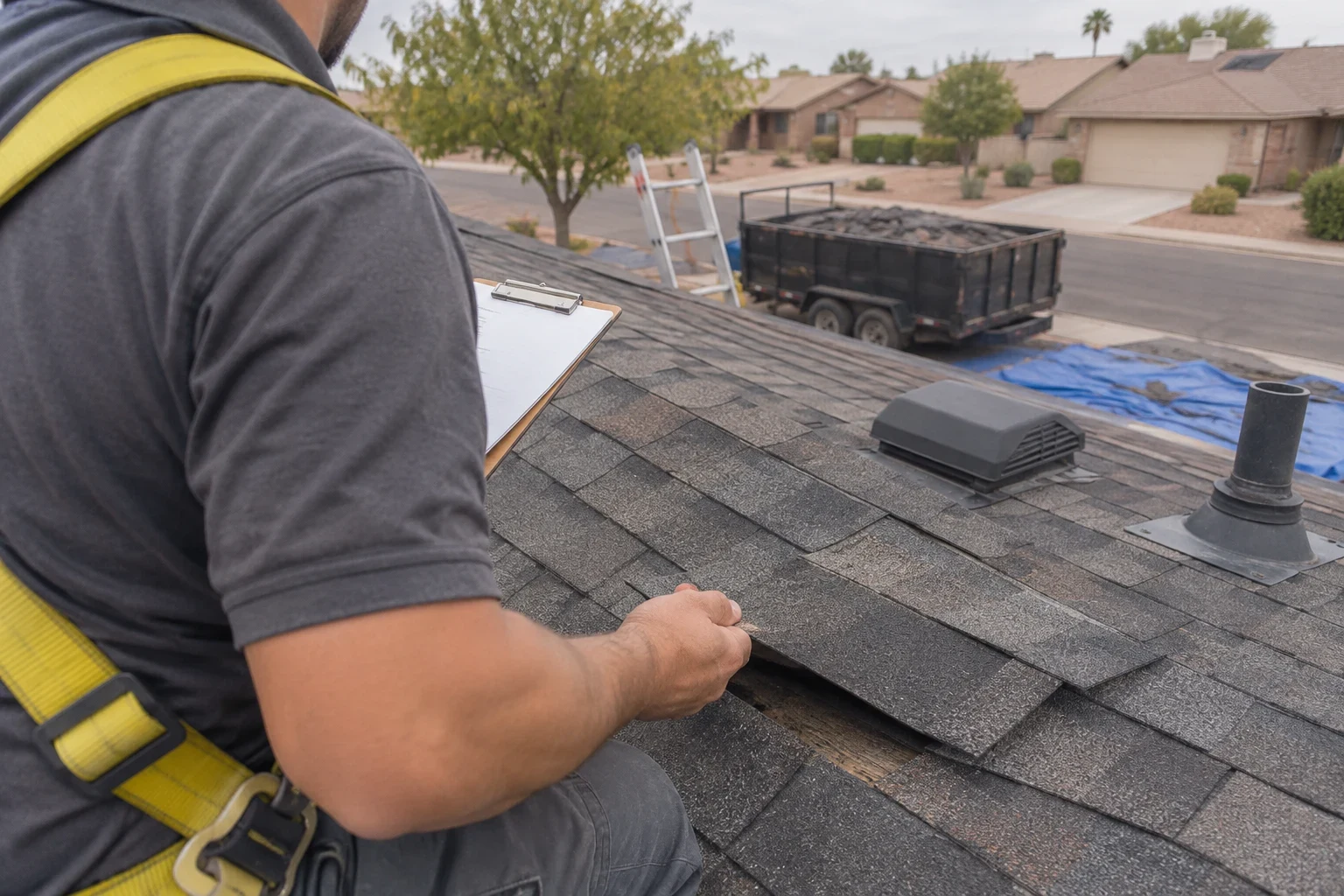
We get up on the roof, lift tiles where needed and take photos. You see what we see. We lay out the choices in plain words: repair, lift and relay, or a full replacement, and what each one means for your home.
- 3
Written estimate
You get a line-item estimate so you know what is included and what is not. If the job needs a permit, we pull it.
- 4
Work days
We protect walkways and plants, stack reusable tile with care and leave the roof covered at the end of each day. We tell you before we start about how many days it should take.
- 5
Cleanup and walk-through
We haul off old felt, broken tile and nails, run a magnet over the yard and driveway, and walk you through what we did.
Tile roofing questions we hear
Can you reuse my existing tiles?
Most of the time, yes, especially with concrete tile. A few always break on the way off, so we plan for some replacements. We pick new pieces that sit right next to the old ones, and if the color or shape won't be a perfect fit, you hear that from us before the work starts.
Is clay or concrete tile better?
Both handle heat well. Concrete is heavier and more common on homes around here. Clay holds its color longer and weighs less, but it costs more and can be more brittle underfoot. If you're choosing, we walk you through both.
Should I climb up and look at my tiles myself?
Please don't. Tile snaps when a foot lands in the wrong spot, and a hairline crack you never notice can turn into a leak later. A look from the yard, or from a ladder set at the eave, tells you plenty. The walking is our job.
What warranty comes with your tile work?
Our labor is covered by a 10-year warranty. On new tile and underlayment, there is also a 30-year manufacturer warranty, which comes through roofing material providers. Before any work begins, we explain in plain terms what each warranty covers and what it doesn't.
Do you do tile roofs outside Litchfield Park?
Yes. We also work in nearby towns like Goodyear, Avondale and Surprise. The process and the written estimate are the same wherever your home is.
Not sure what your tile roof needs?
Tell us what you're seeing. We'll explain what is likely going on and set a time to come look and put it in writing.