ServicesRoof Replacement
Roof Replacement in Litchfield Park
When the layers under your roof are worn out, more patches just buy a few months. We replace tile, shingle and foam roofs from the deck up. Before you decide anything, we tell you what we found and what each option means.
What a replacement really means
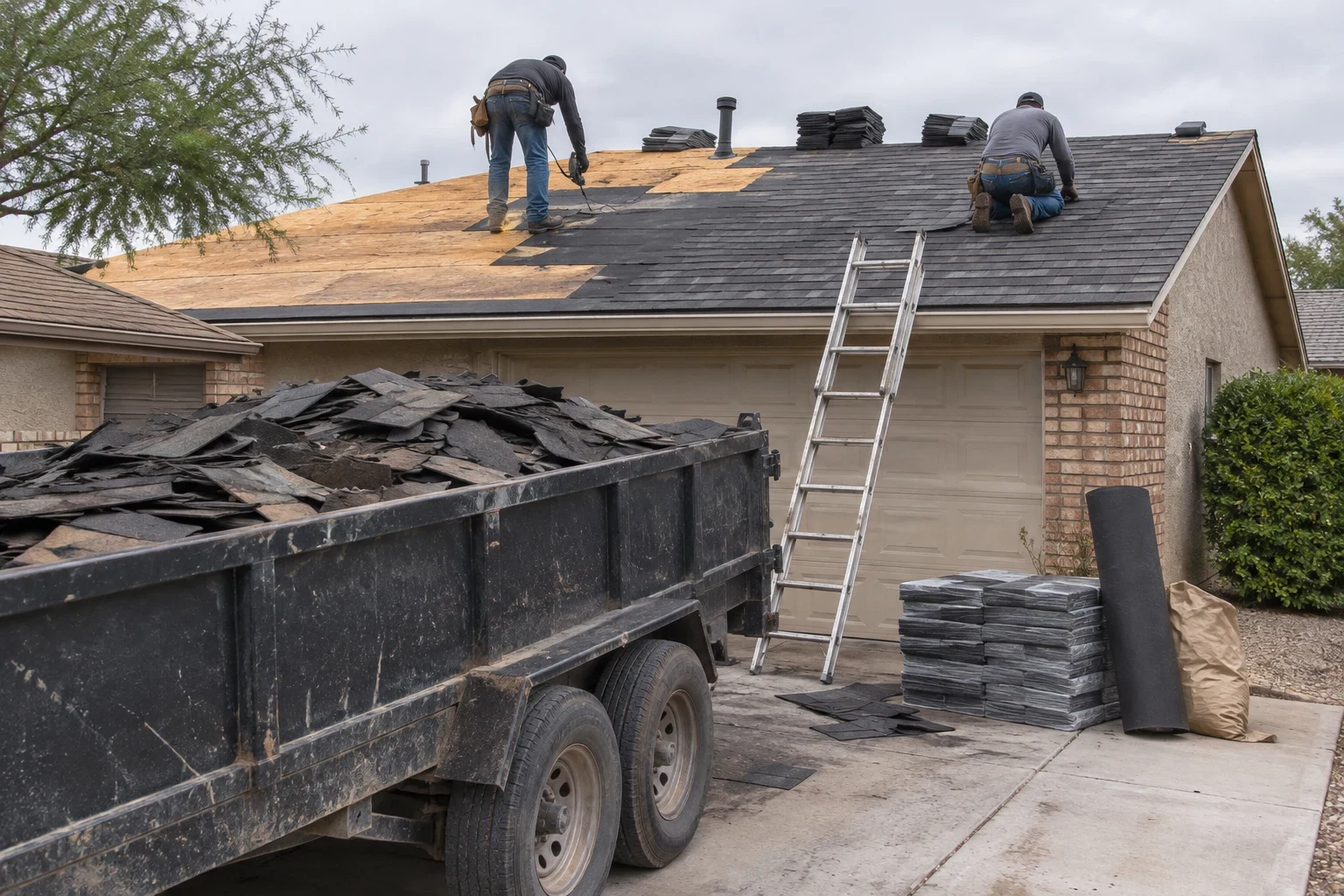
A roof is more than what you see from the street. Under the tile or shingles is an underlayment, and under that is the wood deck. Replacement means we take the worn parts off, fix any bad decking, and put on new layers that keep water out for years to come.
On a tile roof, the tiles often outlast the felt underneath. Concrete tile can be lifted, stacked and relaid on new underlayment, so you may not need all new tile. Shingles are different. They dry out and lose granules in the sun, and they come off completely. Foam roofs on flat sections get stripped or recoated, depending on how far the damage goes.
We tell you which case your home falls into and why. If a roof repair would honestly do the job, we say so.
What the work includes
Tear-off to the deck
We strip the old roofing and underlayment until the wood is bare. That way nothing new gets laid over a problem we couldn't see.
Deck repair
Plywood that is soft, stained or coming apart in layers gets cut out and replaced. You see photos of each bad section before any new wood goes in.
Underlayment and flashing
A new layer of underlayment covers the whole deck. We also replace the metal flashing at walls, chimneys, vents and valleys, since those joints are where leaks usually begin. Old, worn flashing does not go back on.
Tile relay or new roofing
Sound tile gets relaid, or we install new tile, shingles or foam, depending on your roof and your budget. Our Tile Roofing, Shingle Roofing and Foam Roofing pages go into each one.
Ventilation check
A hot attic cooks a roof from below in the desert. We make sure the vents are sized right for the new roof.
Cleanup
We cover plants and landscaping with tarps, run a magnet sweep for nails, and haul off the old material.
Signs your roof needs replacing
Leaks keep coming back
If the same area leaks again after a repair, the underlayment is usually worn out. Fixing the top layer won't stop what's failing below it.
Brittle felt under the tile
Lift a slipped tile and look. If the felt underneath cracks or crumbles, it has stopped protecting your home.
Shingles curling or bald
Curled edges and loose granules piling up on the patio or ground mean the shingles have baked in the sun. They won't lie flat and seal again.
A wavy roof line or a soft deck
If the ridge looks uneven from the street, or a section flexes when someone walks on it, the wood below has likely soaked up water and started to rot.
Foam that's cracked or spongy
Exposed foam breaks down fast in strong sun. Once water gets into it, a recoat can't save it.
How a replacement job runs
- 1
We walk the roof with you
We check the roof, the attic and the deck, take photos, and talk through what we see. You get a written estimate with each line spelled out.
- 2
Permit and scheduling
We pull the building permit and set a start date. We plan around monsoon season and the hottest weeks, when we can.
- 3
Tear-off and deck work
Old roofing comes off one section at a time so your home isn't left open. Any bad decking gets replaced that day.
- 4
New roof goes on
Underlayment, flashing and the new roofing go down in order. On tile jobs, the saved tile goes back with new tile mixed in where needed.
- 5
Final walk-through
Once the city signs off, we walk the job with you, clean up, and hand over your warranty paperwork.
What moves the price
We price each roof from what we actually find on it. Your written estimate breaks the job into separate lines, so every charge has a plain name next to it. If tear-off turns up rot we did not expect, we stop, show you photos and the added cost, and wait for your OK.
- Roof size and pitch
- Square footage sets how much underlayment and roofing we order and how many days the crew spends up top. A steep pitch means harnesses, roof jacks and careful footing, and all of that adds labor.
- Material choice
- Relaying your existing tile usually costs less than buying new tile. Shingles, new tile and foam each land at a different point, and we walk you through how they compare.
- Deck condition
- Solid plywood adds nothing to the bill. Rotted sections mean new wood and the labor to cut it in.
- Details on the roof
- Skylights, chimneys, valleys and a crowd of vents all need their own flashing work, and that takes time.
- Layers to remove
- If an older roof is hiding under the current one, there is more to tear off and more to haul away.
Roof replacement questions
Something not covered here? (623) 632-0878
Can you reuse my tile?
Often, yes. Concrete tile that is not cracked or worn thin can be lifted, stacked on the roof, and laid back over new underlayment. We count the broken pieces and track down replacements that match as closely as we can. Clay and older tile need a closer look before we commit.
Should I patch my roof or replace it?
The answer is under the surface, in the underlayment and the deck. If the trouble is one spot and the layers around it are still sound, roof repair makes sense. If the felt is brittle across the whole roof, patches will keep giving out. We show you photos so you can judge it with your own eyes.
What credentials do you hold for this work?
We hold an Arizona KB-2 contractor license. We also pull the building permit on every roof replacement, so the city inspects and signs off on the finished job.
What warranty comes with a new roof?
The installation itself is backed by our 10-year labor warranty. Separately, the roofing materials carry a 30-year manufacturer warranty that comes through the companies who supply them. At the final walk-through you get the paperwork for both.
How long will my home be torn up?
Most homes take a few working days, longer for large tile roofs or heavy deck repair. We work in sections and cover anything open at the end of the day. Your yard gets swept for nails before we leave.
Do I need to be home?
Not the whole time. We like to meet you at the start and again at the final walk-through. Keep cars out of the driveway and pets inside while we work.
Find out what your roof actually needs
We'll explain what we see, what your options are, and what each one costs. Then you decide.