ServicesFoam Roofing
Foam Roofing in Litchfield Park
On a flat or low-slope roof, we spray new polyurethane foam or renew the coating on foam that is already up there. First we show you the condition of your roof, explain what each choice means and how long it should hold up, so the call is yours.
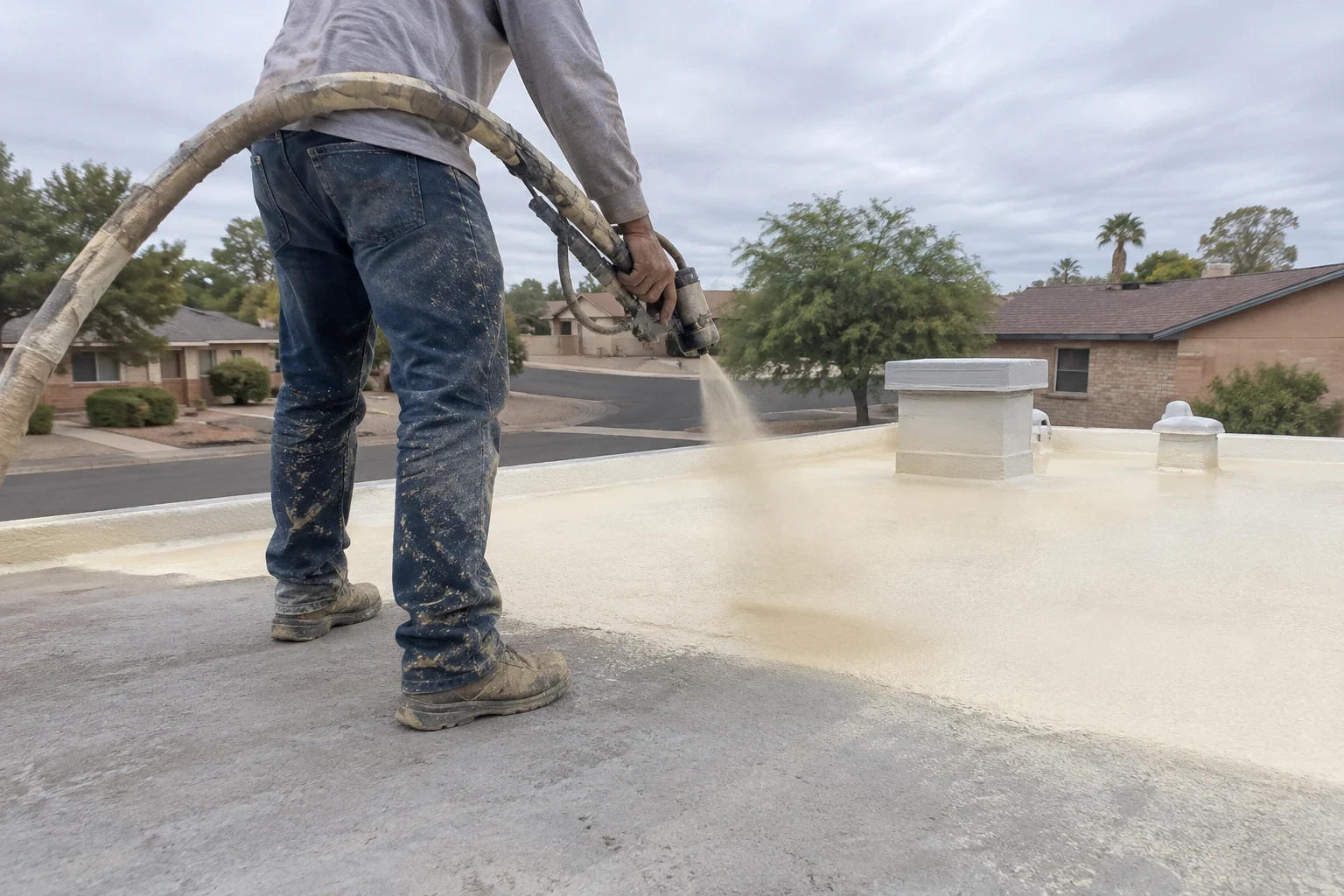
How Spray Foam Works on Your Home
Spray polyurethane foam starts out as a liquid. It puffs up in seconds and sets into a single hard layer with no seams for water to find. On top of that goes a coating. The foam handles waterproofing and insulation. The coating shields the foam from sun.
Most people underrate the coating. Foam left bare in UV light breaks down quickly. It goes brown, then powdery, then wears thin. Renewing the coating on a regular schedule is what keeps the foam underneath good for decades.
Foam works best on flat and low-slope roofs, including homes with parapet walls and AC units sitting on top. On a steeper roof covered in tile or shingles, foam is the wrong tool, and we will say that up front.
What the Work Includes
A look at what's under there
We check the existing roof for wet spots and soft areas before quoting. Foam sprayed over wet material traps the problem. You get photos of what we find.
Removing wet or failed material
Damaged sections get cut out and replaced. Sound, dry roofing can often stay in place, which saves a full tear-off.
Prep and priming
We clean the surface, mask off walls, windows and equipment, and prime where the substrate needs it so the foam bonds.
Spraying the foam
Foam goes on in passes to the planned thickness. We shape it to move water toward drains and scuppers instead of letting it sit.
Base coat and top coat
Two coats of elastomeric coating, acrylic or silicone, go over the foam. We explain the difference and which one fits your roof.
Recoats for existing foam roofs
If your foam is still sound but the coating is chalky or thin, a recoat may be all you need. That is often much less work than a new roof.
Signs Your Foam Roof Needs Attention
Chalky or thin coating
Rub your hand across the roof. If it comes away white and powdery, the coating is wearing down. That is the time to recoat, before the foam is exposed.
Brown or crumbly foam showing
Exposed foam looks tan or brown and feels gritty. Once UV gets to it, it erodes a little every season.
Blisters
Raised bubbles usually mean moisture or a poor bond under the surface. Small ones can be cut out and patched. Many of them point to a bigger issue.
Bird pecks and small holes
Birds like to peck at foam. Each hole lets water in, and wet foam spreads the damage around it.
Water standing after rain
Ponding that lasts more than a couple of days after a monsoon rain wears out coating faster. It can mean low spots that need built up.
How a Foam Roof Job Goes
- 1
We come out and look
We walk the roof, check for moisture, and measure. Then we explain whether you need a recoat, repairs or new foam, and why.
- 2
Written quote
You get a line-by-line quote that shows foam thickness, coating type and any material we plan to remove. No mystery numbers.
- 3
Spray day
Foam needs a dry surface and calm air. In summer we start early, before the wind picks up and the heat sets in. We cover cars, walls and plants nearby against overspray.
- 4
Coating and cleanup
Coats go on once the foam cures. We clean up, walk the roof with you, and show you what to watch for between recoats.
What Moves the Cost of a Foam Roof
Foam pricing comes down to how much roof there is and what shape it is in. A recoat on sound foam costs far less than tearing off an old roof and starting over. We price it after we see it, and we explain each line.
- Roof size
- Square footage drives the amount of foam and coating. Parapets and curbs add surface too.
- Condition underneath
- Wet or rotted material has to come out before foam goes on. The more we remove, the more it costs.
- Foam thickness
- Thicker foam adds insulation and helps fix drainage, but it uses more material.
- Coating choice
- Acrylic and silicone coatings cost different amounts and recoat on different schedules. We go over the trade-off with you.
- Equipment and access
- AC units, vents and skylights take extra masking and detail work around them.
Foam Roofing Questions
Something not covered here? (623) 632-0878
What lifespan should I expect from foam?
Foam under a well-kept coating can stay in service for decades. The coating is what wears, and most types need renewing every several years depending on the product and how thick it went on. Let the coating go and UV starts eating into the foam, which shortens its life.
Can you spray foam over my old roof?
In many cases, yes, as long as the old roof is dry and firmly attached. Any wet sections get cut out first. We check before we quote and show you photos of what we found.
Will foam make the rooms under my roof cooler?
Foam puts a layer of insulation over the whole deck, and a light-colored coating bounces back much of the sun. A lot of homeowners feel the difference in the rooms right under the roof. How much you notice depends on foam thickness and the insulation already in your attic.
Is your work covered by a warranty?
Yes. We stand behind our labor with a 10-year warranty. On top of that, the roofing material providers offer a 30-year manufacturer warranty on their products.
Who does the work?
We are an Arizona KB-2 licensed contractor. Our crews spray and coat foam roofs in Litchfield Park and nearby towns such as Goodyear, Avondale and Surprise.
Should I go with foam or another flat roof system?
That comes down to your roof, how it drains and whether you are fine with recoating every so often. Our Flat Roofing page covers the other choices, and we can go over them with you on the phone.
Find Out What Your Foam Roof Needs
Tell us what you're seeing up there. We'll explain your options and set a time to come look.