ServicesNew Roof Installation
New Roof Installation in Litchfield Park
When your room addition, casita or new house is framed and waiting, we take the roof from bare sheathing to finished surface. First we lay out each material in plain terms, covering cost, weight and upkeep. Then you make the call.
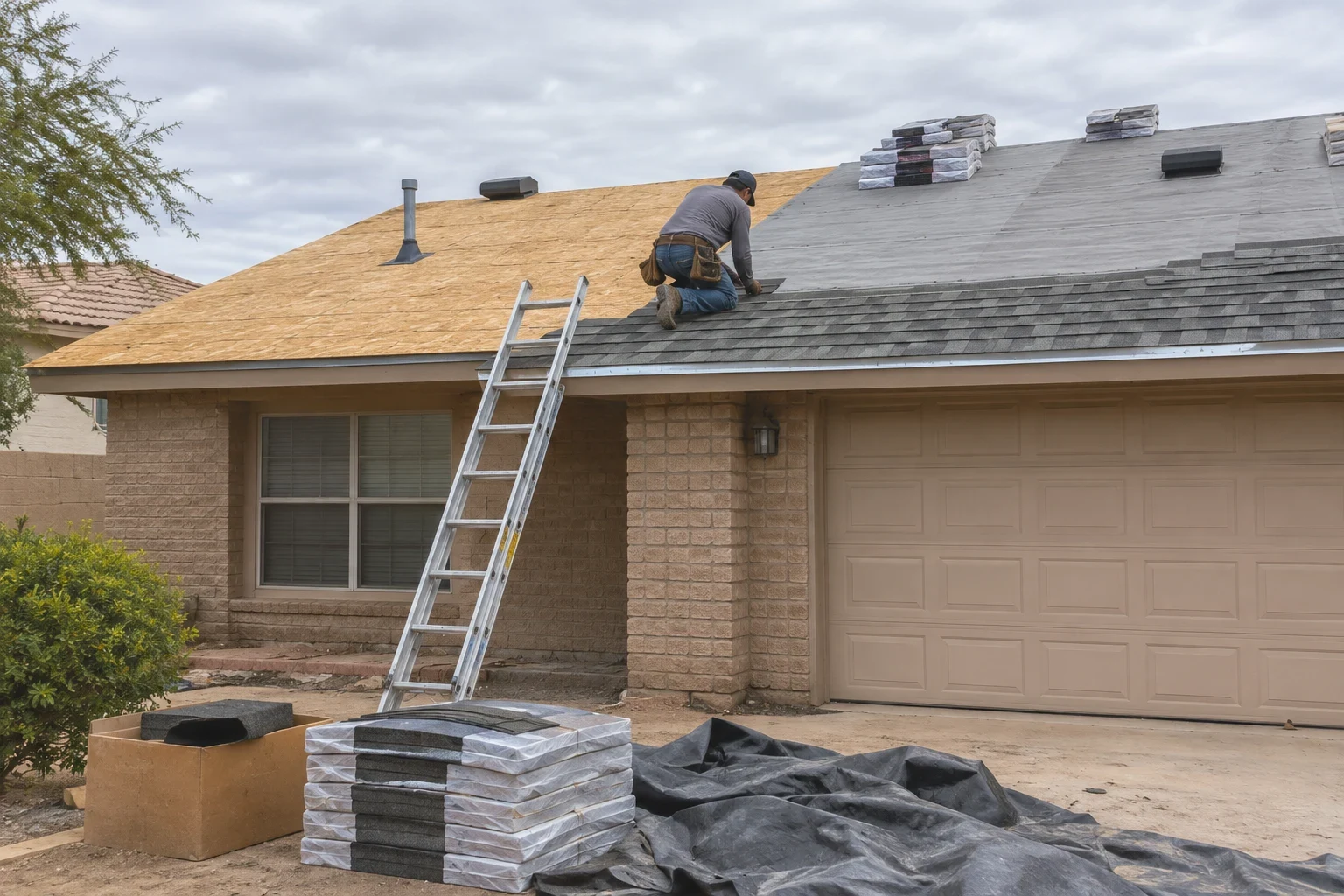
What a New Roof Installation Is
A new roof installation goes on a structure that has never had a roof. That could be a room addition, a detached garage, a guest casita or a custom home. If your house already has a worn-out roof, that job is a roof replacement, and we cover it on its own page.
Starting fresh is a good spot to be in. Nothing old has to come off, and nothing hidden is waiting under it. The work is about getting the decisions right: which material suits the roof pitch, how the new section ties into the existing house, and how the attic will breathe in summer heat.
We are an Arizona KB-2 licensed contractor. We do the roofing and work alongside your builder or framer so the schedule holds together.
What the Work Includes
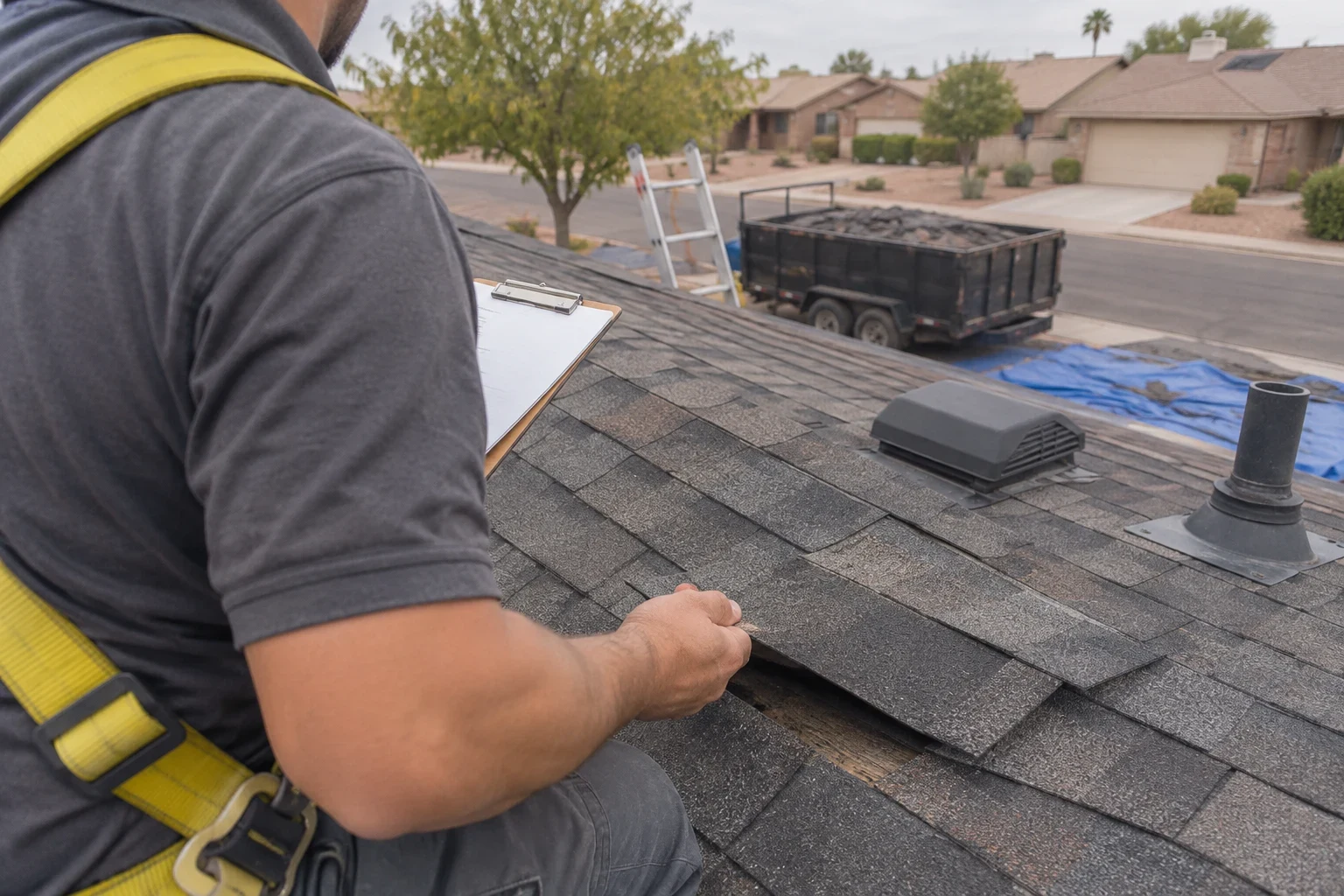
Sheathing looked over first
Before any layer goes down, we check the plywood or OSB your framer put on. Loose panels get re-nailed and gaps get fixed so nothing weak ends up buried.
Underlayment matched to the material
Under tile, the underlayment does the real waterproofing, so it has to be a heavy grade. Under shingles we use a synthetic felt. Low-slope areas get a membrane or a foam system, and we tell you why each one goes where it does.
Flashing at every edge and wall
Drip edge, valley metal, wall flashing and pipe boots go in as the roof goes up. These joints are where new roofs most often leak, so we do not rush them.
Vents sized to the attic
We match intake and exhaust vents to the attic below. Moving hot air out lowers the heat load on your home and keeps the underlayment from baking.
Tie-in to the existing roof
For an addition, we cut back part of the old roof and lace the new section into it. Done right, the seam sends water down the slope instead of holding it.
Cleanup each day
At the end of every day we sweep the yard with nail magnets and take scrap off site. Other trades and your family can move around safely.
When New Roof Installation Is the Right Call
- You are adding living space
- A new bedroom or den built onto the house needs a roof of its own, one that matches your home or blends in with it.
- A casita or garage is going up
- A detached building can be a chance to use a simpler material, or one that costs less, than the main house.
- Your builder needs a roofer
- When your general contractor or framer is lining up trades, we can price the roofing and slot into the build schedule.
- A covered patio is becoming a room
- Lots of patio covers are framed at a slope too low for a room underneath. We will say so straight if the pitch or the material has to change.
- You are not sure what material fits
- Tile, shingle and foam each have pitches they handle best. If the plans are done but the roof material is still open, now is a good time to talk it through.
How the Job Runs
- 1
Call and plan review
You tell us what is going up. We look at the plans or the framing, the pitch and where the new roof meets the house.
- 2
Line-item estimate with options
Your estimate is written out line by line. If more than one material fits, we set them next to each other with notes on weight, cost and upkeep.
- 3
Permit and start date
A roof on a new structure needs a permit, and we pull it. Then we pick a start date that fits around your framer and the other trades.
- 4
Installation
Underlayment goes on first to dry in the roof, then flashing, then the finish material. On an addition, tile or shingle work often runs a few days. A whole house takes longer.
- 5
Final walkthrough
We go over the finished roof together. You get the photos we took of the underlayment and flashing before they were covered, along with your warranty paperwork.
What Moves the Price
We price every new roof from the plans. There is no flat rate. Size, pitch and the material you pick drive most of the number, and we go through the estimate with you item by item so nothing on it is a mystery.
- Roof size and shape
- A bigger roof takes more material. Hips, valleys and dormers each add labor and extra flashing.
- Material choice
- Concrete tile is far heavier than shingles and slower to set. Foam fits flat sections and is priced by the area covered and how thick it goes on.
- Pitch and access
- A steep roof calls for more safety gear and slower work. A tight lot or a tall two-story wall can change how we get material up top.
- Joining new to old
- On an addition, some of the existing roof has to come up and be reset where the two meet. A more complicated joint means more hours.
- Permits and scheduling
- The permit fee is part of the cost. Waiting on other trades can also stretch the timeline.
New Roof Questions
- What is the difference between a new roof installation and a roof replacement?
- A new installation is built on framing that has never been roofed, such as an addition or a new home. A replacement starts by tearing off the old roof. That tear-off can expose damaged decking, so replacements tend to carry more unknowns. We explain that work on our Roof Replacement page.
- Can my addition match my existing tile roof?
- In many cases, yes. Plenty of concrete tile profiles are still made, but older tile fades in the sun, so the color may not line up perfectly. We find the closest match and tell you straight how it will look beside your current roof.
- What warranty comes with a new roof?
- Our own work is backed by a 10-year labor warranty. On the material side, the roofing material providers stand behind their products with a 30-year manufacturer warranty. We hand you the paperwork for both at the final walkthrough.
- Is foam a good choice for a new flat section?
- Foam suits low-slope roofs well. It sprays on as one continuous layer with no seams, then gets a coating that reflects sunlight. That coating has to be redone every so often, and we spell out the upkeep before you decide. Our Flat Roofing page covers the other low-slope options.
- Do you work with my general contractor?
- Yes. We stay in touch with your builder about when the framing and sheathing will be ready. As our dates firm up, we pass them along so the other trades can plan around us.
Have Plans for a New Roof?
Give us a call and describe the project. We will lay out the roof options that suit it and what each one means, so you choose with the facts in front of you.